
The Systems That Teach You You’re Safe
If your body has been bracing for impact, this is for you
reading time ~5 minutes
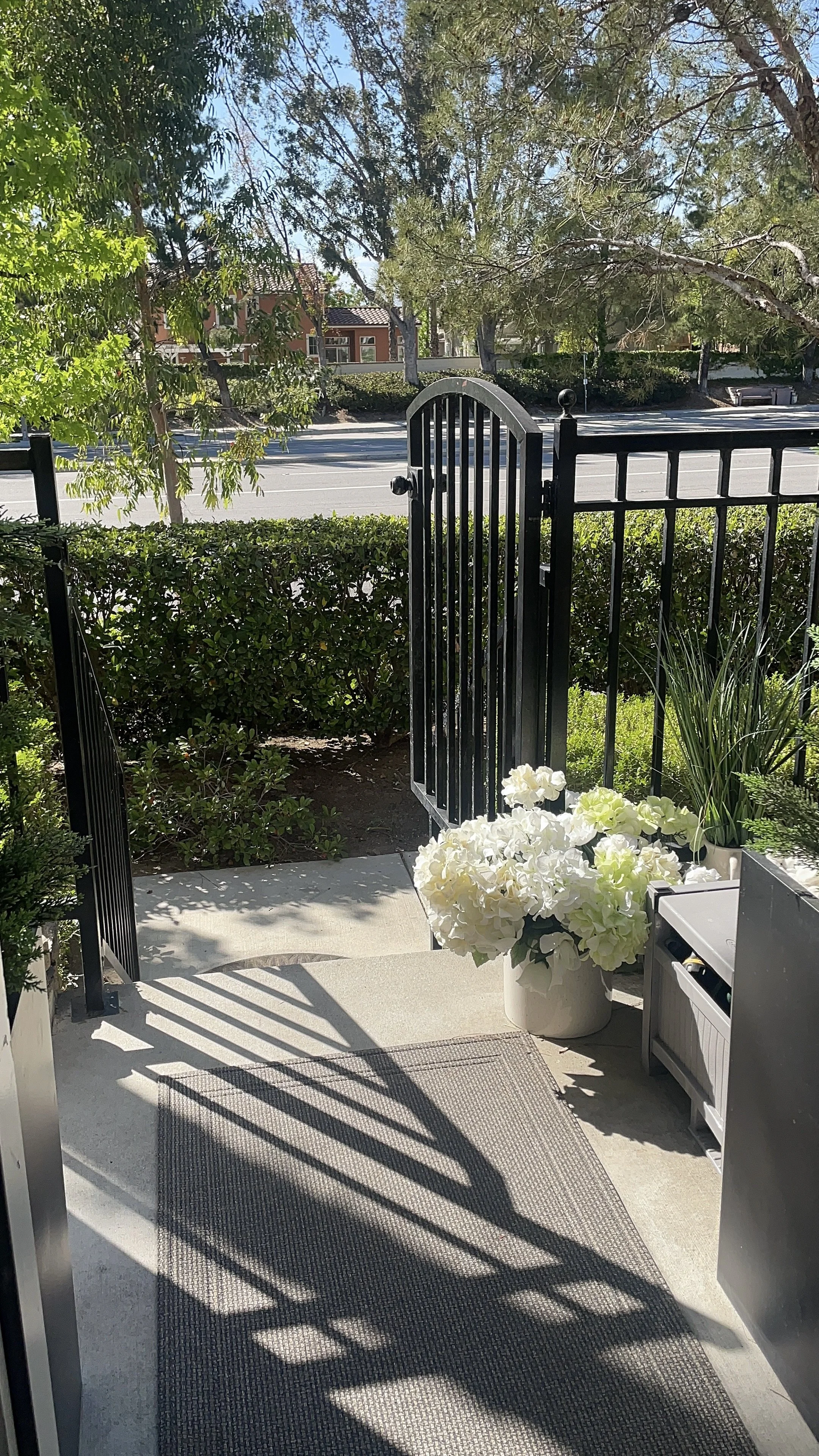
For a long time, I didn’t realize I was carrying tension in my body from heavy moments — waiting for relief to finally come.
My thoughts looked something like:
If I can just get to the end of this, then it'll be over and I can go lick my wounds.
If I can just get them to see my point of view, then they'll finally understand me.
If I can just make it through this conversation, this week, this season, then maybe I can finally exhale.
Sound familiar?
Here’s the thing I’ve learned: relief doesn’t come when the moment ends.
And, as it turns out, my body wasn't the problem. It just didn't know it was safe yet.
Let me tell you what I realized ↓

Aftershocks
I didn’t learn what aftershocks were until I moved to Southern California and experienced my first earthquake.
Apparently, after a larger earthquake concludes, smaller ones can follow and last up to seconds, days, or years. They can also cause damage, especially to infrastructure already weakened from the first, larger earthquake.
See where I’m going with this?
In our context, the larger earthquake is the initial trigger or event that causes the unease in our bodies.
An argument, disappointment, difficult conversations, being misunderstood, etc.
The aftershocks, then, are what happens once those larger events end.
For me, they were showing up as:
Rumination
Anxiety
Seeking external validation
Replaying conversations
Random headaches and jaw clenching while asleep
Constantly feeling exhausted
Overwhelming anxiety
These not only left me in a perpetual state of bracing for impending doom, but they also caused their own damage in significant ways.
Why This Matters
The aftershocks are not personality flaws.
They are indicators that your body does not feel safe.
Often times, we believe the false narrative that something is wrong with us, instead of a much simpler truth:
Our body needs something from us and it’s using these, usually uncomfortable, signals to try and alert us.
It’s really that simple.
Translation: I Need You To Slow Down
Here’s what I believe our bodies are trying to tell us when they’ve gone too long without relief from the aftershocks:
I need you to slow down. I am trying to save you but I am exhausted and it’s impacting my ability to perform optimally.
This was important for me to consider because the reason I often felt so stuck, like no productive routine/ quotes/ or anything made me feel better, was because I was always waiting on someone else.
I never considered that the answer to what my body needed only involved me.
And I don’t say this lightly:
I say it because I know what it feels like to betray your own interests, showing up and doing for others, in attempts to resolve heaviness that can sometimes come from relationships.
Not just that — but environments where repeated patterns taught your body that it was not safe to exist as is.
If you have aftershocks caused by something that happened in the past, I’m talking to you.
If you feel like a kid trapped in an adults body, unable to live freely and make your own choices, I’m talking to you too.
If you’ve tried endless compromises and nothing seems to work, let me offer you something different ↓
The System
If you’re wondering how to start responding to the signals your body is sending, that’s what this section is all about. Let’s call it The System.
I’m going to show you the six things that I do when the feelings of heaviness arise. Because let’s be real — as long as we’re in relationship with others, some form of that will exist.
Someone is always going to be disappointed or upset, or committed to misunderstanding you.
This system stops making you feel responsible for that.
It also gives your body something it’s been asking for all along: A way to feel safe being and prioritizing yourself again.
A quick note: I'm speaking to everyday anxiety, stress, rumination, and heaviness here. If at any point what you're experiencing feels life-threatening, please skip this list and contact emergency or mental health services immediately. This is not a substitute for that — and there is no shame in needing more support than a blog post can offer.
1. Yoga
All you need is a mat — or honestly, two or three towels stacked on the floor will do. Just get on the ground and let your body move. The goal at this stage isn't a quiet mind — it's just showing up.
Restorative yoga is my personal favorite because the poses are gentle, joint-friendly, and held longer. Over time, it’s what built my breath control.
And that breath control? It became the exact tool I now default to in heavy moments where my heart used to race and anxiety would swoop in.
Even ten minutes is enough to loosen the tightness and start training your nervous system that it's safe.
2. Journaling
If you only do one thing for yourself after reading this, please let it be getting a journal. A spiral notebook works. A composition book works. It doesn't have to be beautiful to be useful. I recommend journaling so often because it's the fastest way to help you begin to recognize your own voice — especially when everything around you is loud.
One of my favorite tips is when you start to feel tight because something is bothering you, grab your journal and write until it becomes clear to you what you’re really responding to.
From there, it’s easier to decipher if the thing is really yours to own or if you can gently release it.
I wrote more about what journaling has taught me here.
3. Tea
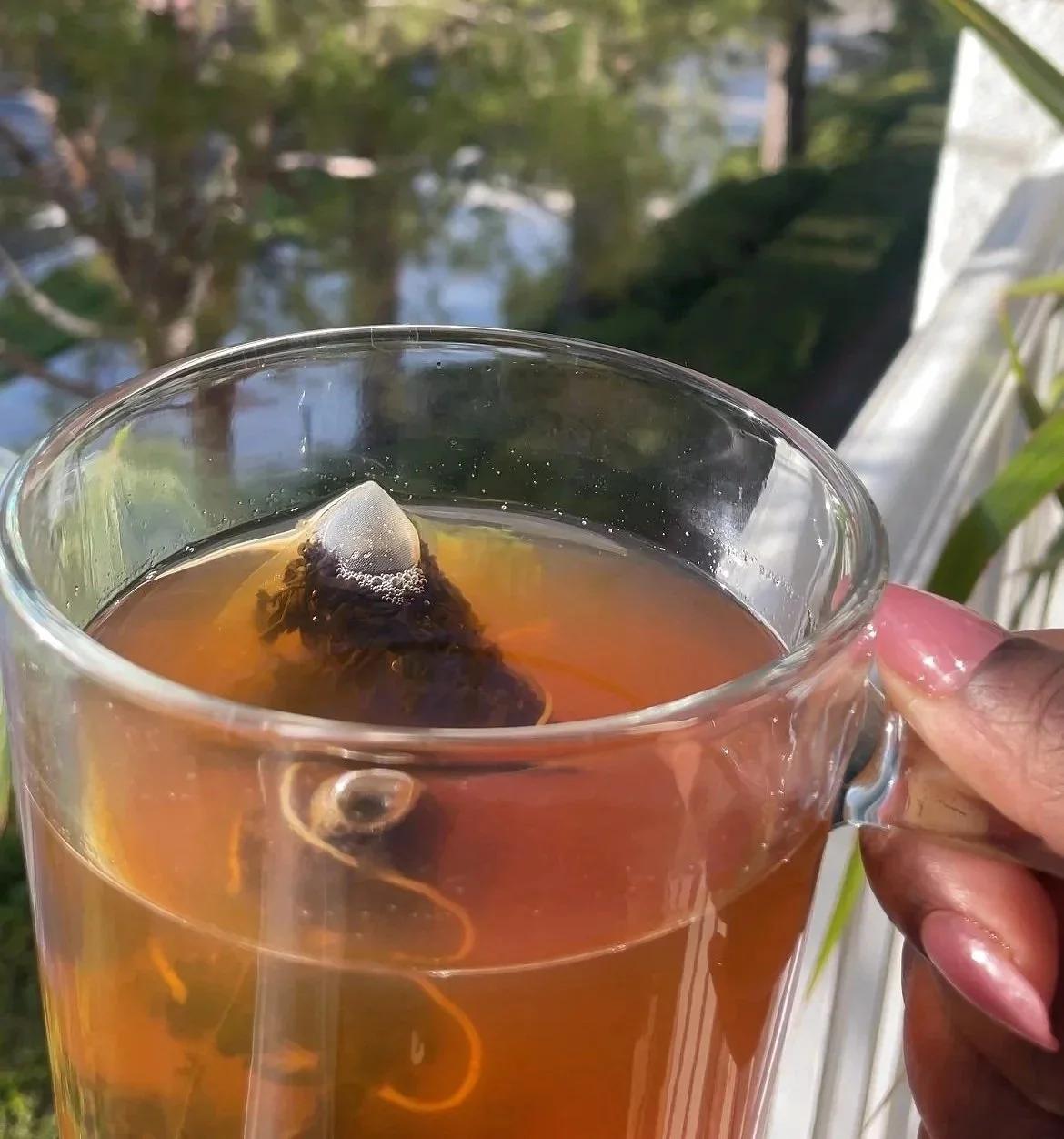
I know this one sounds too simple, and that's exactly the point. The act of making tea — grabbing the cup, hot or boiling water, waiting, wrapping your hands around a warm cup — is a ritual. It tells your body the pace is changing. It's one of the smallest things in The System and one of the most consistent.
I do this almost every day to ground myself and usually enjoy it while journaling, sitting outside, or in the middle of my night time routine.
4. A Nighttime Routine
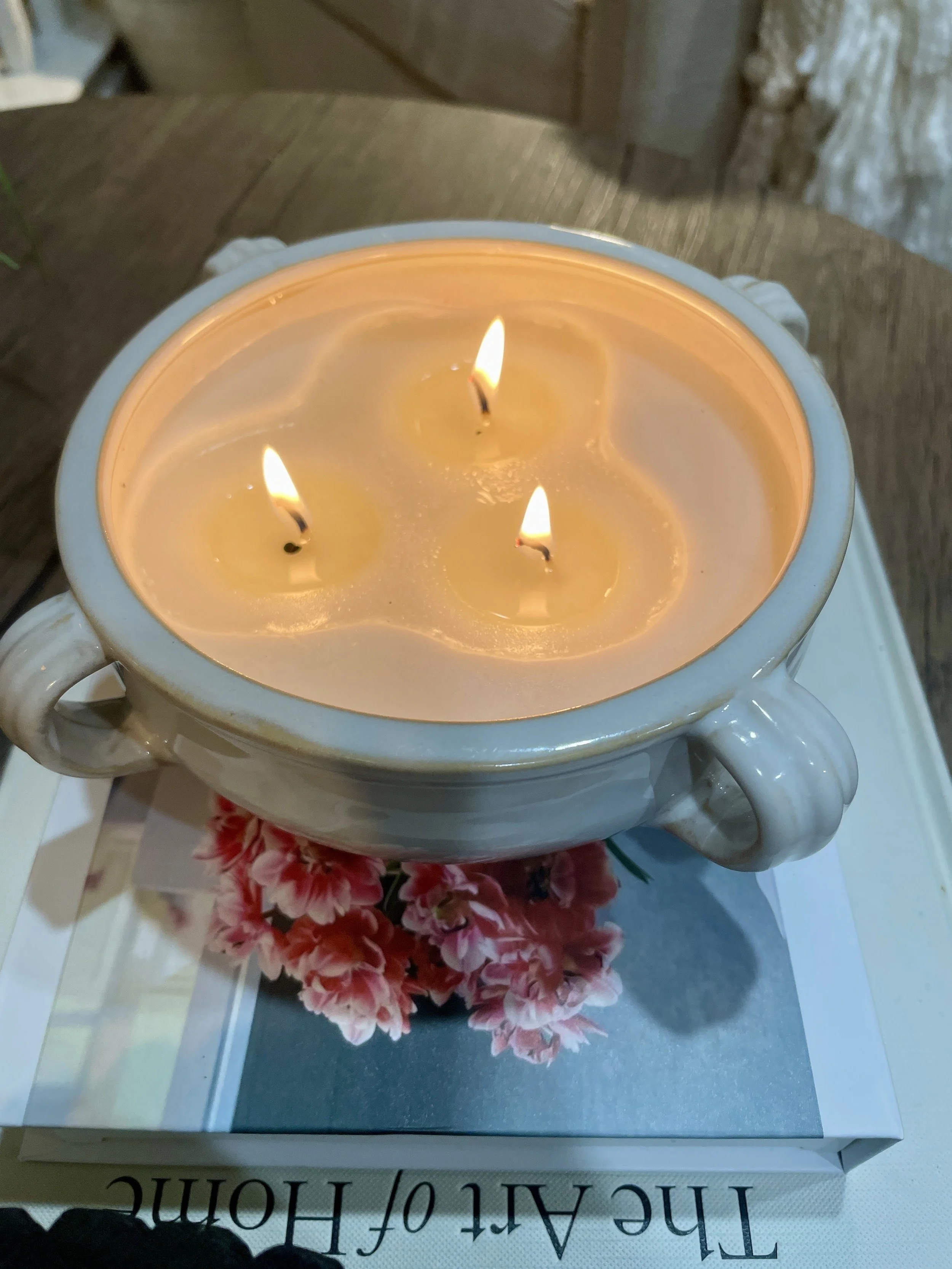
Your nervous system loves predictability. It's how it learns that a threat is not on the horizon.
A nighttime routine — done consistently, in the same order, at roughly the same time — is one of the most reliable ways to send that signal. You're not just winding down. You're training your body to recognize: the day is over and I am safe.
It doesn't have to be elaborate. It just has to be something you can do, even on your most tiring day.
Grab the free checklist here if you want a place to start.
5. An Herb Garden
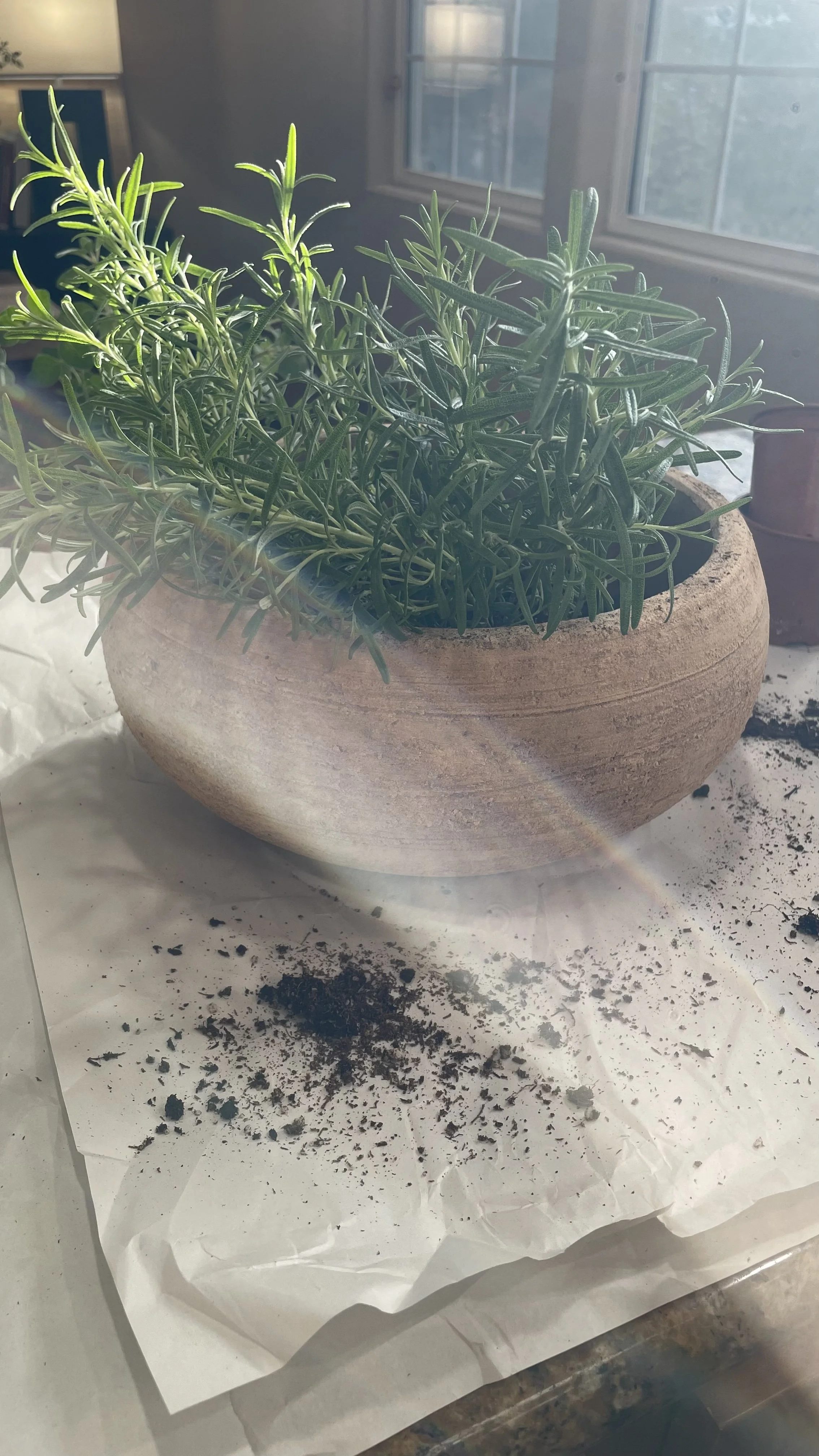
Bear with me on this one.
When your nervous system has been in survival mode, it loses touch with the present. An herb garden — even three small pots on a windowsill — is a daily, tangible reason to come back to right now.
You water it. You watch it grow. You prune it and eventually cook with it. That full cycle, repeated over time, is grounding in a way that's hard to explain until you've done it.
It's not about having a green thumb or outdoor space. It's about giving your body consistent evidence that life is happening now — not in the aftermath of something that already passed.
Here's how I built mine to actually last
6. Your Environment
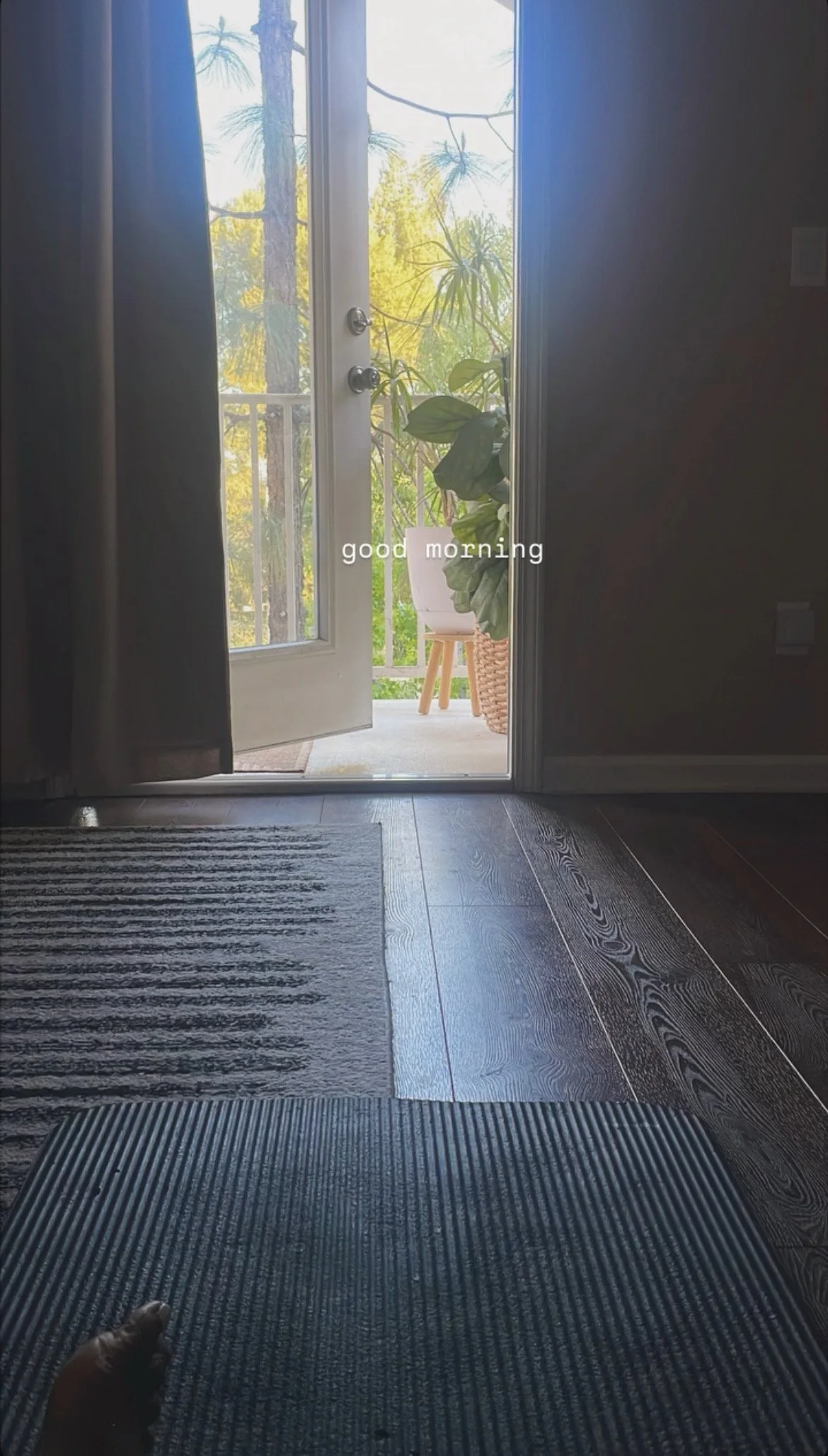
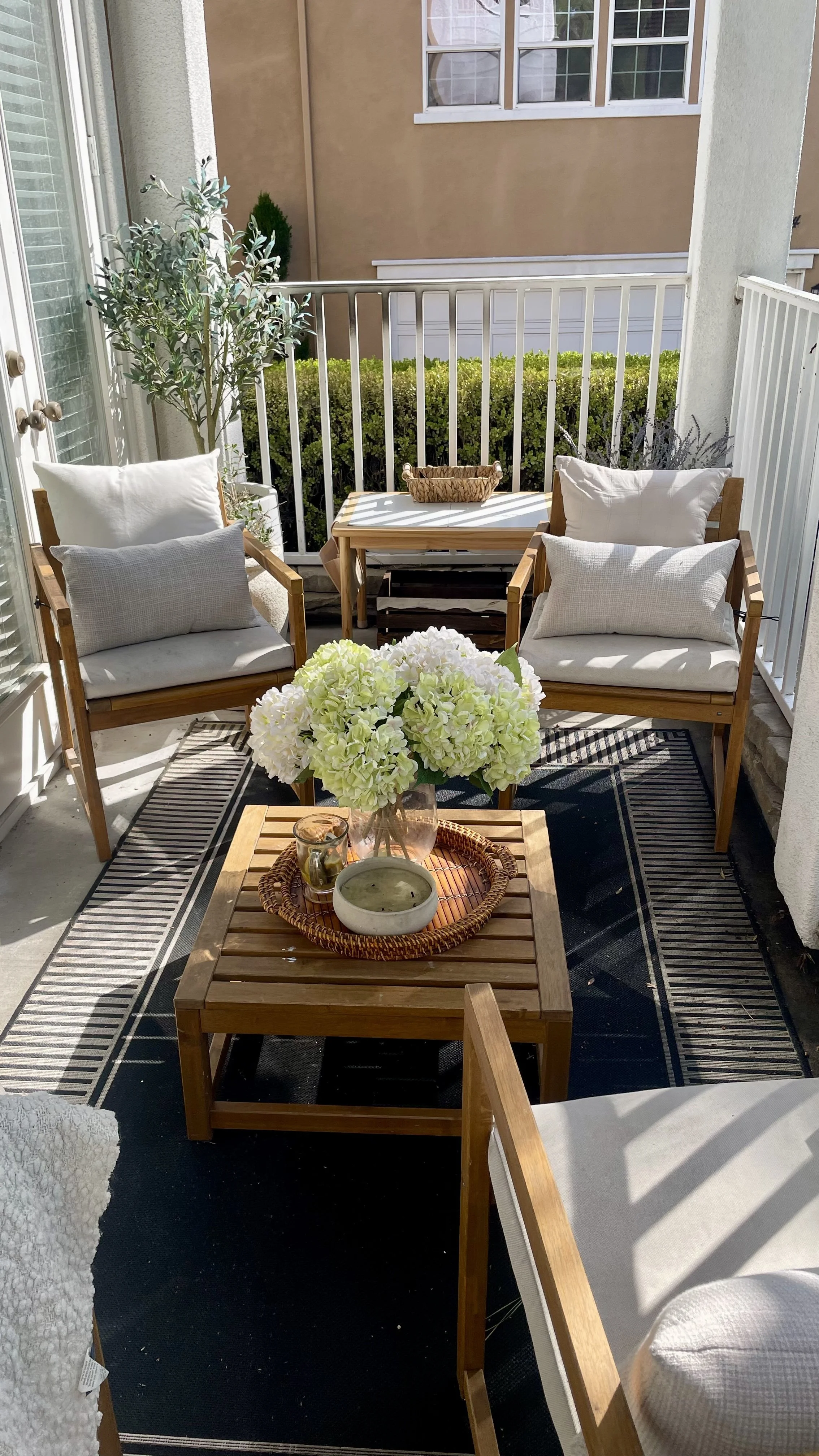
Your nervous system needs a recognizable place where your body can exhale.
It doesn't always have to be inside your home — especially if the people inside your home are sometimes the source of the heaviness. A patio, a balcony, a garage, the park down the street, a parking lot where you can quietly (and safely) eat lunch — anywhere you can easily get to and feel like it's yours. For my husband, it's home but also the gym. For me, it's our bedroom, the patio, and sometimes the yoga studio across town.
I’ve made it work in small spaces and with no money. So can you.
The goal isn't decor. It's a place your body learns to associate with safety — where you can take a breath and start learning exactly where to go when you need to come back down.
A note before you go
What you see on social media — the light-filled rooms, the styled corners, the aesthetics — that's real, but it's not the whole story. Nobody is making reels of their hardest days, and believe me, we’ve all had them.
If any of this feels out of reach, I want you to hear me: you don't need any of that to start. You can journal at the bus stop. You can do stretches in the shower. You can grow basil in a plastic cup on a windowsill. Really.
None of it matters, though, if you don't feel safe inside yourself first.
That's what The System is really about. Not knowing immediately how to respond and show up differently in the moments of heaviness. Rather, learning how to process the aftershocks in your body and begin to find your way back — again and again — to the version of you that knows you’re okay.
One more thing. A big part of feeling safe is learning to take up space — knowing what you need, saying it out loud, and not shrinking to make other people comfortable.
If that's something you're working on, I've written about it here and here. Don’t rush this part though. You need to build some currency with yourself before you learn how to accurately represent yourself in heavy moments. Trust me, I’m still learning.
And that's what I'm building here, so I’m glad you're riding along for it.
Want a simple place to start tonight? Grab the free Night Time Routine Checklist — it's a quiet, gentle way to begin.
With Love,
Ambyr
