
Become More Assertive Without Feeling Guilty
Because being assertive was never about being loud. It's about creating breathing room for the life you actually want.

I missed the memo that in order to be a healthy adult, and live a fulfilling life, you need to know how to become more assertive.
It wasn’t until my late 20’s that I realized I was good at prioritizing the needs of others but not so great at advocating for myself and what I believed in or desired.
If you've ever talked yourself out of something you wanted just to keep someone else comfortable — this is for you.
This is my attempt to give you what I wish I'd had sooner — a clear, guilt-free roadmap to finding your voice and actually using it.
→ What Does Being Assertive Actually Mean?
Let's clear something up first. Most people hear assertive and think aggressive — loud, confrontational, difficult. That misconception is exactly what keeps so many of us quiet.
Assertiveness is simply the confidence to speak up for what you want, need, or believe. That's it. No attitude required.
→ How Do I Know When I Need to Be More Assertive?
Here's the honest answer: if you're reading this post, you probably already know.
But if you need confirmation — check how many of these sound familiar:
You consistently put others' needs above your own
You tolerate disrespect to keep the peace
You stay quiet when you deserve recognition
You hesitate to speak up or offer a different opinion
You agree to things you don't actually want to do
You show up for people who don't show up for you
If any of these hit close to home — this post is for you. 🤍
My Assertiveness Essential —
Zicoto Notes Journal

When I notice I'm uncomfortable after an interaction — or I froze in a moment and didn't honor myself — I write it down. Not to dwell, but to pay attention. Patterns show up on paper that you miss in real time. If something keeps coming up in your journal, that's not a coincidence. That's a sign your assertiveness is required somewhere.This is the journal I reach for every time.
→ Is It Easy? And What About the People I Love?
Honestly — it depends on who you are and where you come from.
For some people assertiveness comes naturally. But those usually aren't the people reading this post.
If you come from a cultural or religious background where the good of the group comes before the individual, finding your voice can feel like a lonely and even disloyal act.
The shift from who you've always been to who you're becoming is significant — and the people around you will feel it too.
As you find your voice you will be met with resistance.
Some people will feel betrayed. Others will feel challenged or caught off guard.
That's okay. Give them time.
Have the uncomfortable conversations. Be gentle with yourself and with them as everyone adjusts to the new normal.
But if someone decides to walk away because you acted in your own best interest — let them.
The people who love and support you will find a way to adjust.

→ How Do I Stop Feeling Guilty?
Here's what I know now that I didn't know then — the guilt doesn't disappear.
It gets quieter. And the more you practice assertiveness, the quieter it gets.
But the real work isn't just mental. It's physical.
The biggest obstacle most people don't talk about is learning to sit with the discomfort in your body — that tight chest, that sick feeling in your stomach after you said no or put yourself first.
Your nervous system reads it as danger. And sometimes, depending on your history, it is responding to something very real.
For me, the thing that makes the guilt livable is asking myself one question: did I honor my highest self? If I didn't betray my values, my needs, or what I know to be true — I know I'll be okay. I won't ruminate. I can come back to myself.
My Grounding Essential —
Yoga Mat
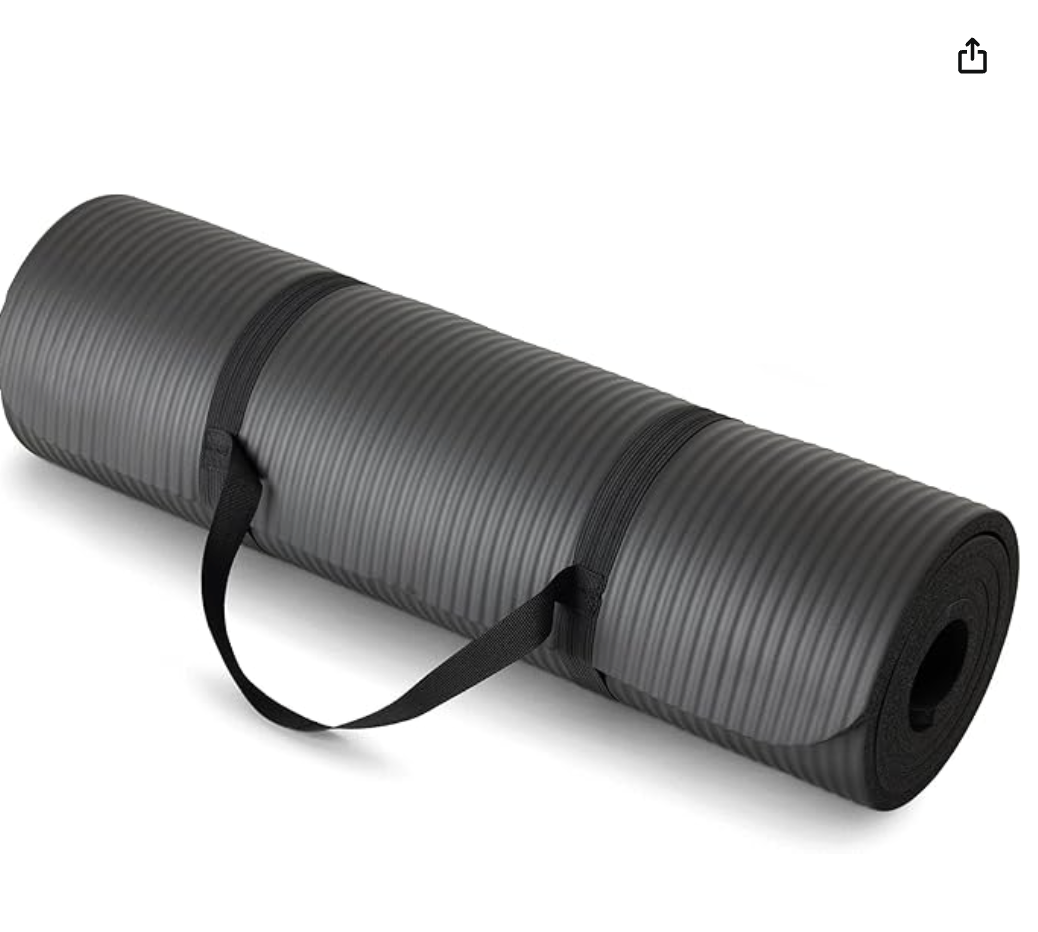
What helps me get there is my yoga mat. Restorative yoga gives my body something to focus on besides the discomfort. What I'm really doing is giving myself love and reassurance — reminding myself that I am safe, okay, and protected. That I don't have to stay in a heightened state of alert just because something felt hard. This is the exact mat I use at home.
Sometimes that perceived danger comes from old wounds. Sometimes it's actual. When it's actual — safety comes first, always.
Yoga can be a starting place to get clear and stable within yourself before deciding what to do next.
But if the situation is more serious, please seek help immediately. You deserve real support. 🤍
When you're operating with love and the best of intentions — the only person who can make you feel guilty is you. And that's actually good news.
Because it means you're also the one who can set yourself free.
→ What Can I Actually Do to Become More Assertive?
This is the part you've been waiting for — and I'm not going to make you work for it. Here are 20 things you can start doing right now. Pick one. Practice it. Then pick another.
Correct people who mispronounce or misspell your name
Maintain eye contact during conversations
If you're busy, ask people to schedule time on your calendar instead of breaking your focus to address it
Join a group like Toastmasters to build confidence with speaking and leadership
Find your people — in your community or online — and follow them closely
Use the word no at least once a day. Without explanation.
Know what you want before you speak. Create goals with clear, defined plans
Stay quiet about future plans and big goals. It keeps doubt and naysayers out of your head
If you feel uncomfortable or disrespected, say so. Then take time to decide how you want to respond
Define your boundaries clearly — with everyone. Audit them every six months
Stop calling yourself a people-pleaser. Replace that label with something that reflects who you're becoming
Move your body. Confidence in how you feel physically translates directly into how you show up
If someone is more than five minutes late without a heads up — leave
Find data or research to support your beliefs and plans. It builds confidence and credibility
Lead with logic over emotion when making decisions
Spend intentional time alone. Enjoy your own company
Let calls go to voicemail. If it's urgent, they'll keep calling
Reduce your investment in situations and relationships that no longer serve you — even lifelong ones
If you see something wrong, say something
Consider therapy or working with a life coach. You'll be better and lighter because of it 🤍
One more thing before you go. ✨
Becoming more assertive takes practice — and so does rest.
Join the Ambyr Things community and the 30-Day Practicing Rest Calendar + 10 Gentle Journal Prompts lands in your inbox instantly.
The journal prompts especially were made for moments exactly like this — when you need to process, get still, and hear your own voice.
A Final Note —
Assertiveness is not a destination. It's a practice — and some days you'll nail it and some days you'll freeze and think of the perfect response at 2am. That's okay. That's part of it.
What matters is that you keep choosing yourself. Quietly, consistently, and without apology.
I'm still in this work too. Every single day. So if something from this list has clicked for you, or you have a tip that's helped you find your voice — drop it in the comments. I genuinely want to know. 🤍
With Love,
Ambyr